CCTV Drain Inspections in the Upper North Shore
See inside accessible drainage lines to locate roots, damage, displaced joints and recurring restrictions.
Call Now0493 824 176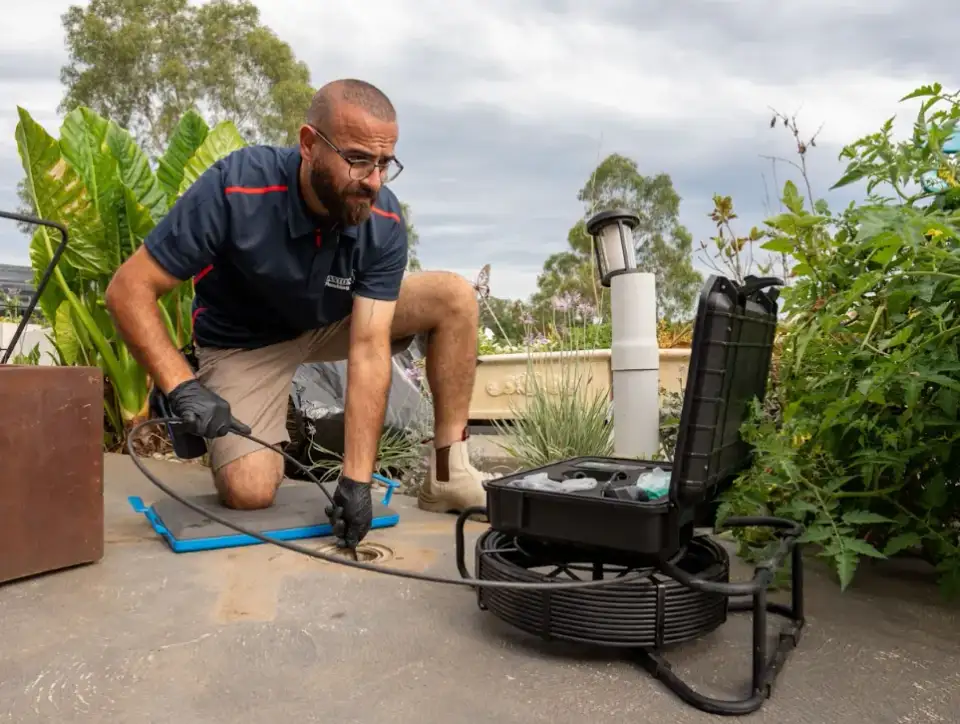
Signs you may notice
- A blockage keeps returning
- The clearing point is uncertain
- Roots or structural damage are suspected
- A targeted repair needs accurate location
Possible causes
- Cracks or open joints admit roots
- Pipe sections move or collapse
- Foreign objects remain in the line
- A low section holds debris and wastewater
Symptoms help narrow the investigation; they do not confirm the cause on their own.
Diagnosis before equipment
A camera is most useful after access and flow are established. We guide it through the accessible line, interpret what is visible and use a locator where needed to relate the internal finding to the property.
A camera shows only accessible visible pipe. Standing water, debris, bends and pipe size can restrict inspection. Clearing may be needed first. A sonde and locator can relate findings to a surface position where signal and access allow.
Tools and materials
- Self-levelling CCTV camera head
- Recorded inspection monitor
- Electronic sonde locator
- Measurement and marking equipment
Selection depends on safe access, the obstruction and the actual pipe condition.
Safe first actions
Keep any previous footage or drainage plans available. Avoid flushing to demonstrate an active backup. Do not open covers or dig to create camera access; describe the known openings and symptoms.
If wastewater is near electrical equipment, keep clear. Immediate danger needs the appropriate emergency service.
Clearing versus repair
An image is evidence to interpret, not an automatic replacement recommendation. The plumber explains the visible defect, inspection limits and whether targeted repair, maintenance or further investigation is warranted.
After the agreed work, flow is checked where appropriate and the findings, remaining limits and next steps are explained.
CCTV Drain Inspections: your questions
Will the camera clear the blockage?
No. It is an inspection tool. A heavily obstructed line may need clearing before useful footage can be obtained.
Can CCTV prove the entire system is sound?
No. It records the accessible route and visible condition at the time. Unreached branches or obscured sections should be identified as limitations.
How does the plumber locate an underground fault?
A compatible camera sonde and electronic locator may relate the internal position to the surface. Depth and position need interpretation and appropriate checks before excavation.
Is CCTV useful for a one-off slow sink?
Sometimes, but a straightforward accessible trap issue may not need it. Inspection scope should match the symptoms and what the initial assessment finds.
Discuss cctv drain inspections
Call with the full address, symptoms and urgency so current coverage and the next available response can be confirmed.