Drain repairs
A Drain Runs Beneath a Mature Tree: Can the Repair Route Avoid Major Roots?
A drain repair may be able to avoid major tree roots by changing the route or using a suitable repair within the existing pipe. That depends on the defect, access and tree-protection requirements. Have the drainage findings and likely root impacts assessed before choosing a trench route or cutting roots.
Key takeaways
- Roots found inside a drain do not map the tree’s whole root system.
- Relining, local replacement and rerouting have different suitability limits.
- A camera inspection cannot establish every external root or underground service.
- Confirm council requirements and any arborist input before disturbing major roots.
Identify the pipe defect first
Start with the drainage problem that needs fixing: recurring blockage, a damaged joint, collapse or another confirmed defect. Ask for the location and supporting inspection findings. A tree near the drain is relevant context, but its presence alone does not establish the extent of pipe damage or the right repair method.
Keep previous clearing reports and footage available. They may help show whether the same section has been involved repeatedly. If the camera could not reach part of the line, record that limitation rather than assuming the unseen section can support a particular repair.
Separate internal roots from the roots around the pipe
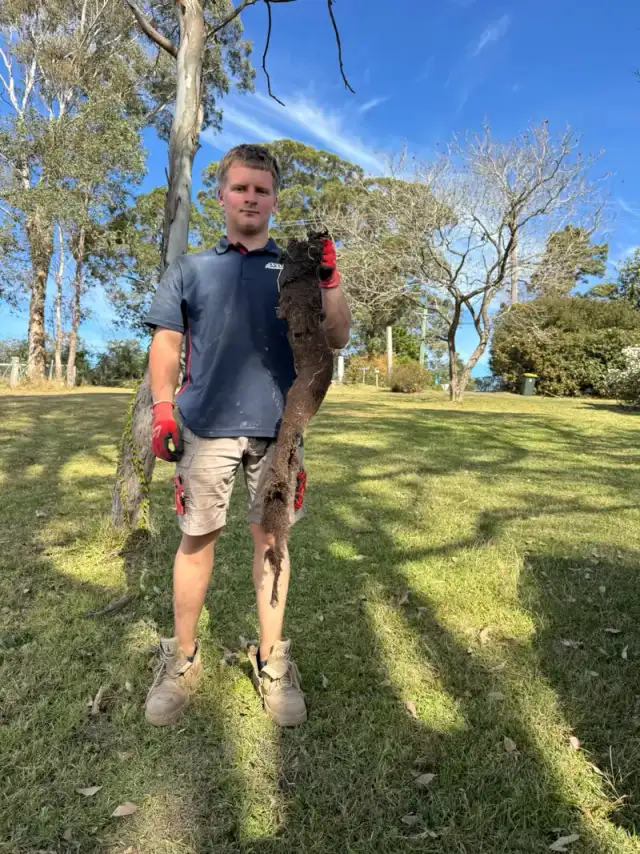
A drain camera can show roots that have entered an accessible part of the pipe. It does not provide a complete map of the tree’s roots in the surrounding soil. The path of a proposed trench therefore needs its own assessment, even when the internal drain footage is clear.
Do not cut exposed roots yourself to prepare for the plumber. Major roots can be important to the tree, and the implications of disturbing them need proper assessment. Tell the contractor about nearby mature trees before excavation is priced or machinery access is arranged.
Why council requirements matter
Ku-ring-gai Council’s tree FAQs explain that tree removal may be restricted where affected sewer or stormwater pipes can instead be replaced, relined or relocated. Check the rules applying to your address and tree; this does not mean every property or proposed method has the same approval requirements.
Compare methods against the actual condition
For drain repairs on the Upper North Shore, ask which options are suitable for the inspected defect. A repair inside an existing pipe may reduce excavation in some situations, but it cannot be assumed suitable for every damaged or badly displaced line. Access and the existing pipe condition still matter.
A local replacement may address a defined section, while rerouting might avoid a sensitive area where the site allows it. These alternatives can involve different access, levels and connection requirements. Ask the contractor to explain the trade-offs against the findings rather than simply choosing the least visible method.
Plan the route with the tree in mind
Show the proposed work area to the drainage contractor and ask whether an arborist’s advice or further root investigation is needed. Where that advice is required, obtain it early enough to influence the route. It is much less useful after a trench has already been opened.
Include equipment access, material storage and surface reinstatement in the discussion. Protecting a tree is not only about the narrow line of the new pipe. Tell the contractor which areas of the garden must remain accessible and any constraints affecting the machinery or work zone.
- Where is the confirmed pipe defect?
- Which repair methods can address it?
- What root or tree assessment is needed?
- Which permissions and service-location checks apply?
- How will the area be restored afterwards?
Do not overlook other underground services
Drain footage does not establish the position of every cable, gas line or water pipe nearby. Ask how buried services will be identified before excavation. Provide available plans, while recognising that plans and on-site verification have different roles in planning safe access.
If the proposed route crosses a boundary or shared area, raise that before accepting the scope. Permission and ownership questions should be resolved alongside the technical plan. A shorter trench is not automatically the most practical route when access or authority is uncertain.
Agree what happens if conditions differ
Underground findings can change a planned repair. Ask how unexpected roots, services or pipe condition will be handled and who can authorise a variation. Keep the drainage scope and any tree-protection requirements together so they are not treated as unrelated instructions.
At completion, request the relevant repair records and any supplied inspection evidence. Confirm what was repaired, what remains outside the scope and whether further monitoring or maintenance was recommended. The aim is a defined drainage repair with the surrounding tree constraints properly considered.
Quick check
Has the repair route been checked beyond the pipe interior?
Confirm the defect location, external root considerations, buried services and any permissions before excavation. A drain camera alone does not answer all four questions.
Frequently asked questions
Can a drain camera show all the roots around a pipe?
No. It shows accessible internal conditions. External roots and the impact of excavation need separate consideration.
Does finding roots mean the tree must be removed?
No. Repair options and applicable tree rules need assessment. Do not assume tree removal is necessary or permitted.
Will relining always avoid excavation?
No. Suitability and access depend on the pipe and defect. Ask what excavation, if any, is still required for the proposed work.
Can a collapsed pipe always be relined?
Do not assume so. The contractor needs to assess the remaining passage, geometry and condition before recommending a method.
Who should assess major roots near a trench?
Ask whether a qualified arborist’s input or further root investigation is needed, alongside the drainage assessment and council requirements.
Can I cut roots before the contractor arrives?
Do not prepare the route by cutting roots yourself. Have the implications and any permission requirements assessed first.
Is rerouting always cheaper than replacement?
No. Access, levels, connection points, services and reinstatement all influence the scope and cost.
Do council rules vary across the Upper North Shore?
Check the relevant council and property requirements. Do not apply one address’s permission or exemption to another.
What if an unexpected large root is exposed?
Pause the affected work and follow the agreed assessment and authorisation process rather than cutting it to keep the trench moving.
What should the repair record identify?
Ask for the repaired location, method, completion checks, any supplied footage and any remaining limitations or follow-up.
Conclusion
A repair near a mature tree needs more than a line drawn between two pipe ends. Establish the defect, compare suitable methods and plan root protection and permissions before disturbing the ground.
We’re Antons Blocked Drains Upper North Shore, operated by Antons Plumbing & Gas. Our drain repair service on the Upper North Shore can help you plan the next step. Give us a call with previous inspection findings and the tree’s position so we can discuss an assessment of the repair options.